Showing posts with label protein. Show all posts

Saturday, May 23, 2015

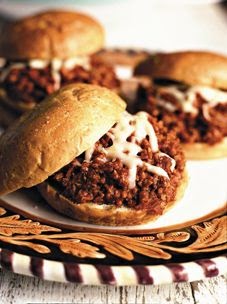
Vegan Sloppy Joes

This recipe was shared with me by a family member when they heard I had adopted a vegan diet. I have tweaked the original recipe from the Imus Ranch Cookbook for kids and cowboys, which includes a bunch of delicious vegan recipes and helps raise money for kids with cancer.


Vegan Cowboy Sloppy Joes:

Ingredients:
    2 Tablespoons Olive Oil
    1 medium Onion, diced
    1 green Pepper, diced
    4 cloves Garlic, peeled and sliced
    2 teaspoons dried Oregano
    3 Tablespoons Balsamic vinegar
    32 oz Tomato Juice
    14.5 oz Fire-roasted diced Tomatoes
    1/2 teaspoon Salt
    1/2 teaspoon Black Pepper
    2 Tablespoons Worcestershire sauce**
    1 teaspoon spicy mustard (optional)
    4 Cups Textured Vegetable Protein
    8 Hamburger Buns
    Optional: 2 cups shredded soy mozzarella cheese
   **If you don't happen to have Worcestershire sauce, for this recipe you can substitute:
   1 Tablespoon Chili Powder  
   1 Tablespoon Soy Sauce 
   1/2 Tablespoon Apple Cider Vinegar 
   1/2 Tablespoon Brown Sugar 
   1 teaspoon Lime Juice
   add 1/2 clove Garlic to the original amount


How To
-Heat the oil in a medium saucepan over medium heat. 
-When the oil is shimmering, add the onion, garlic and oregano & sauté until tender, 6 to 8 minutes. 
-Add the balsamic vinegar and boil to reduce by half, about 3 minutes. 
-Transfer everything to a larger pot and add vegetable cocktail, tomatoes, salt, pepper, Worcestershire sauce**, and mustard and bring to a low boil. Simmer for 15 minutes, 

-Add the textured veggie protein and stir until it is softened and the liquid is absorbed.


Nutrition Facts: Vegan Cowboy Sloppy Joes
Portions: 8
Total Calories 159 Calories
Empty Calories* 2 Calories
Nutrients Amount Per Portion
Protein 14 g
Carbohydrate 19 g
Dietary Fiber 6 g
Total Sugars 11 g
Added Sugars 0 g
Total Fat 4 g
Saturated Fat 1 g
Monounsaturated Fat 3 g
Minerals Amount Per Portion
Calcium 50 mg
Potassium 475 mg
Sodium 585 mg
Copper 135 µg
Iron 3 mg
Magnesium 28 mg
Phosphorus 50 mg
Vitamins Amount Per Portion
Vitamin A 41 µg RAE
Vitamin C 43 mg
Vitamin E 1 mg AT
www.SuperTracker.usda.gov

Thursday, February 12, 2015

Almond Milk


   When I first went vegan, I had to find a replacement for milk on my cereal. I tried soy milk and didn't like the taste. I'm so glad I found almond milk! It's delicious and good for you. You don't have to be a vegan to get nutrients from almond milk! I personally prefer the vanilla flavor, but original or plain is better for cooking with it. Silk almond milk is my regular brand. They use non-GMO verified almonds from California.

Did you know almond milk actually has more calcium than dairy milk?

Non-flavored Almond milk would be the healthiest choice of course, but even flavored almond milks have more calcium and fewer calories than milk from a cow.

I have made my own almond milk before with my Grandmother. It takes alot of almonds! But it was delicious! When I did it, we didn't use any cinnamon or honey, but I really liked these step-by-step pictures and instructions on How to Make Almond Milk.

I am interested in finding out where my food comes from. That journey has largely driven my desire to find plant-based alternatives to animal products. I think the typical American diet is too high in animal products.We need to have more concern with how the animals are treated, if not to be humane, then surely for the quality of the products we consume. Buying these dairy alternative products shows consumer demand for a plant-based dairy replacement. This is a small way I can use my purchasing choices to have a voice, to say I want alternative options to be available.

Saturday, January 10, 2015

Veganism

Definition: Different people decide to go vegan for all kinds of reasons from health concerns to ethical beliefs. Veganism for most people is more than just a diet. Vegans are people who do not consume or use any animal products. No meat, eggs, dairy, leather, fur, honey or bone products. Veganism is a perfectly healthy diet. It may seem like a big adjustment at first but can be easily maintained with the proper knowledge. 

To me, being a Vegan isn't about saving the animals, although that's great. I personally would like to well informed. I want to make conscious decisions about my lifestyle. I personally do not believe there's anything wrong with killing an animal for food, however the way we have mass produced animals is an issue to me. It's unhealthy for humans, it's bad for the environment, it's bad for animals, and it enables an economic system where the poor stay poor and the rich get richer. As a person who has all these options and information available to me, I want to use it for the best. I don't want to spend money on practices that I don't support. It has been a tool to help me live a healthier lifestyle. Create a better world starting with your diet.

Protein:
Vegans get asked about protein all the time. It's ignorant. If you've taken biology or chemistry you should know that all living things have protein. Vegetables are living things. The protein from vegetables is actually better for you because it dosent come with the fats and cholesterols that accompany animal protein. Beans, nuts, and whole grains are sources of protein that come with fiber, vitamins and minerals that are awesome for you. I found this explanation from the Vegetarian Resource Group helpful. We need around 0.36 grams of protein per pound we weigh per day. Biased on my weight (125-ish lbs) I need to get about 45 grams of protein a day which I have found fairly easy to do on a plant based diet.

If you know your science, you know that it's not actually protein that our bodies need; it's the specific amino acids that our bodies need in order to make protein that we get from plant or animal proteins. Some foods can be high in protien, but not have all the amino acids we need. For example, grains are lower in lysine (an essential amino acid) and legumes are lower in methionine (another essential amino acid) than those protein sources designated as high quality protein. Meat eaters and vegetarians alike need to get protein from a variety of different food sources to ensure all essential amino acids are being consumed.

Nutrients: Where do vegans get their nutrients?
B Vitamins: in nuts, fortified cerials and milk alternatives 
Vitamin D: Sunlight exposure is one source of vitamin D. Some brands of alternative milks, orange juice and cerials are fortified with vitamin D.
Calcium: Good sources include almondmilk, orange juice and many brands of tofu. Nuts and dark green leafy vegetables including collard greens, kale, mustard greens, and turnip greens also provide calcium. 
Iron: Look for iron in whole or enriched grains and grain products, iron-fortified cereals, dried beans, green leafy vegetables, some nuts and dried fruits.

What it looks like:Veganism does not mean eating salad all day. Veganism is about getting a variety of different foods. More fresh produce. I personally ate alot more rice, beans, pasta, oatmeal and multi-grain breads. Cheese was the hardest thing for me to give up. Eating out can be hard depending on the location. I useually carried snacks, tried to check menus online ahead of time and often found myself creating my own meal out of sides at certian resturaunts.

Famous Vegans: Actors, politicians, musicians, and athletes that are vegan include: Alan Cumming, Anne Hathaway, Brad Pit, Jenifer Lopez, Olivia Wilde, Ellen DeGeneres, Ellen Page, Emily Deschanel, Woody Harrelson, Jake Sheilds, Bill Clinton, Mac Danzig, Alicia Silverstone, Russell Brand, Timothy Bradley, Milo Ventimiglia, Sara Silverman, Arian Foster, Steve-O, Peter Dinklage and many more

Vegan Resources:
books:
Diet For a Small Planet by Frances Moore Lappe
Michael Pollan: Cooked, Food Rules, The Omnivores Dilemma
Mark Bittman: VB6
movies:
Fed Up
Forks Over Knives
A Place at the Table
Food Matters
Food Inc
online:
EatRight.org The Academy of Nutrition and Dietetics
Food Matters
Jamie Oliver's Food Revolution
Party Like a Vegan
Vegetarian Times
PETA

Friday, January 9, 2015

DIY Homemade Granola Bars

Audrey’s DIY Homemade Granola Bars

Recipe:
8x8 pan
1½ cup Oats
½ cup Brown Rice Syrup
½ cup Crunchy (nuts, graham crackers etc.)
½ cup Sweet (chocolate, marshmallows, dried fruit etc.)
½ cup Other (pumpkin seeds, sesame sticks, cereal flakes, etc.)
Optional tablespoon of peanut butter, coconut oil, etc
Optional teaspoon vanilla extract, cinnamon, cocoa powder etc
Makes 8 bars
Bars stay fresh for two weeks
image
1. Preheat oven to 325F
2. Mix ingredients in a bowl (rice syrup may need to be heated for 30 seconds to make it pourable)
3. Use parchment paper or lightly grease pan before pouring in the granola mix. Distribute evenly
4. Bake for 20-30 minutes
5. Let cool for at least 15 minutes before cutting
image
For Christmas 2014 I have made a few batches and will be giving my loved ones granola bars with this recipie. Some of the flavors I made include: Cranberry-Walnut-Pumpkin Seed, Dark Chocolate-Walnut-Cranberry, Peanutbutter-Chocolate chip, Smores(chocolatechips, marshmellows and graham crackers), and Dark-Chocolate-Coconut-Cashew. This recipie is great because there are so many options and different things you can do. I also would suggest useing parchment paper to line the pan, makes it easier to remove the granola bars, but make sure you grease the paper so the granola dosent stick to it. I wrapped the bars in waxed paper, labeled them by flavor and put them in cookie tins with the following note:
Granola Bars might not seem like ahealthy, snack but when you make them at home they can be! This semester I completed my first cooking class, Food Science 101. I learned a lot, the greatest lesson being the confidence to cook and try new recipes. Through my studies of organic chemistry and human physiology, I have gained a better understanding of foods impact on the body which I can now apply to my cooking. I am really interested in antioxidants and urge everyone to get more in antioxidants in your diet.
Brown Rice Syrup is a complex carbohydrate like honey or maple syrup which can all be used to replace simple carbohydrates like sucrose (table sugar) or fructose (in fruits and high fructose corn syrup) in the diet.Complex carbohydrates have a lower glycemic index meaning they take longer to enter the blood stream. Simple carbs provide a ‘sugar rush’ while complex carbs provide a longer-term energy source for the body due to the time required to metabolize them.
Oats are another complex carbohydrate that contain high levels of protein and magnesium. About 60% of Americans are believed to be magnesium deficient which can lead to diabetes, hypertension and other issues. Magnesium is a mineral that makes up some important enzymes inour bodies. It’s involved in bone formation as well as muscle and nerve function. The recommended daily intake for Magnesium is 420mg
Cranberries contain the polyphenol Ellagic Acid.This antioxidant is also found in pomegranates, blueberries and goji berries.Antioxidants are free radical scavengers. They dissolve into the bloodstream quickly, hunt down loose electrons and neutralize them. In every cell in your body, you have mitochondria. These mitochondria take in oxygen and food particles andproduce energy (ATP) and a by-product of free electrons. As you age,the number of free electrons or radicals in your body increases. High numbers of free radicals are known to be linked to cancer, diabetes, cardiovascular disease, Parkinson’s disease and Alzheimer’s. Antioxidants are believed to help prevent these illnesses.
Did you know that Pumpkin Seeds are more protein dense than ground beef? They are a great plant basedsource of protein! They are also high in fiber, iron, antioxidants and magnesium. The proteins in pumpkin seeds contain two great amino acids: Tryptophan which makes serotonin in the brain, needed for mood and sleep regulation and Glutamate which makes the neurochemical GABA which has calming, anti-stresseffects
Walnuts have nearly double the number of antioxidants as other nuts like pecans or hazelnuts. They are also considered a superfood for their highlevels ofthe omega-3-fatty acid alpha-linolenicacid which is essential for brain health. Walnuts also contain proteinmagnesium and B vitamins making them a good food for vegan/vegetarian diets.
image
Dark Chocolate: contains many antioxidants that milk chocolate doesn’t. Dark chocolate can lower blood pressure and is high in iron and magnesium.
Cashews: are another good source of magnesium and antioxidants. They also contain potassiumironprotein and unsaturated fats which are good for you!
Coconuts: contain antioxidants as well. Another good source for iron and magnesium. Coconut oil is awesome because it has so many uses. It can be used in place of other oils in cooking and it’s also greatfor the skin, used in many lotions and washes.